Beneath the Prompt

Episode 1 · Saturday 26 September, 06:30 PT

Beneaththe prompt

Understand what actually happens when you use AI. One question per video, followed the whole way down — from the key you press, through the fiber and the data center, to the silicon that answers and back again.

Deeply researched, plainly explained: every number on this page is labeled and sourced.

Type a prompt · press Enterwaiting
tokens — bytes — first word in —

↓ Your prompt's numbers appear at all five stops below
Token split is an approximation of the real tokenizer (source 15); timings are representative ranges for this class of hardware, not measurements.

From episode 1 · the route

Five stops between your keyboard and the answer

Every figure here appears in the video and traces to a source below. Where a number is an estimate or a representative range rather than a measurement, it says so.

Stop 01 · the keystroke

Eight bytes leave the keyboard

Every key you press is reported to the computer as a small fixed-size packet: which modifiers are held, and which keys are down. Your sentence leaves your hands one report at a time, long before it is text.

8 bytesper keyboard report

A sentence leaves your hands one report at a time.

USB HID keyboard protocol · source 1

A finger pressing a glowing Enter key in close-up.
AI-generated still from episode 1

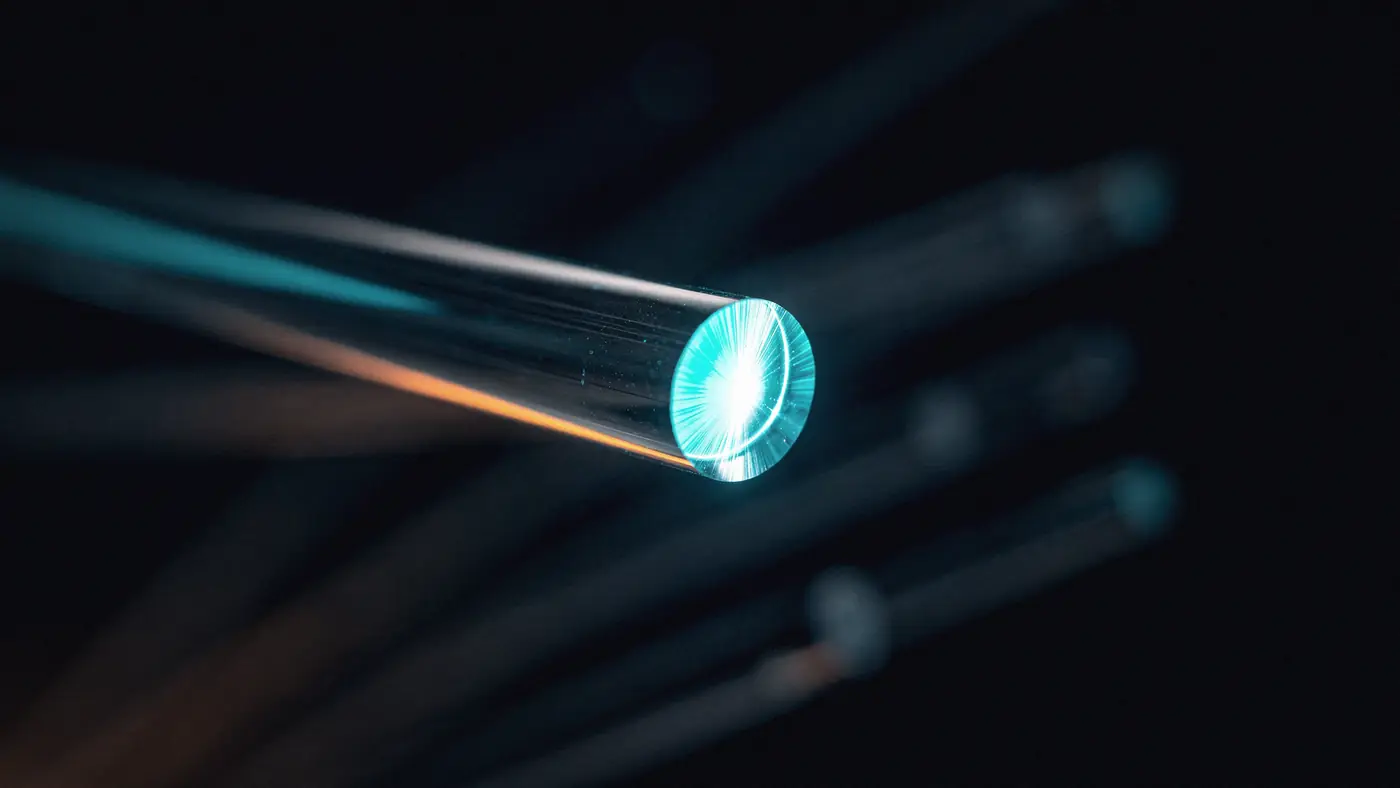
Stop 02 · the fiber

Light, but slower than you think

Encrypted, split into packets and handed to the network, your prompt crosses the country through glass. Light in fiber travels at about two thirds of its speed in vacuum, which sets a floor no amount of engineering removes.

≈ 20 mscoast to coast, one way

Length barely matters here: those 20 ms are distance, not size.

Derived: 4,000 km at 4.9 µs/km · sources 2, 3

Optical fiber strands carrying light in the dark.
AI-generated still from episode 1

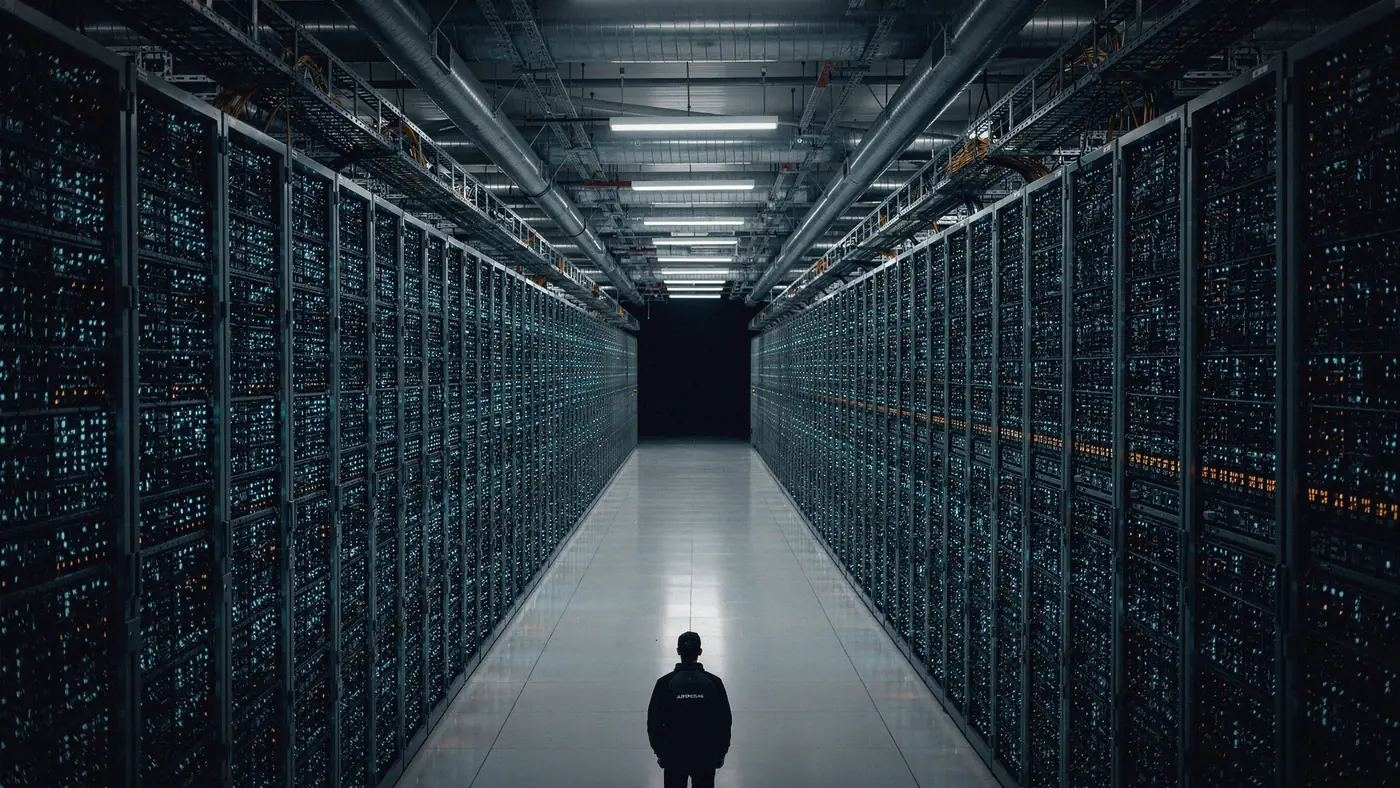
Stop 03 · the building

A hall that eats power

The destination is not a server under a desk. It is a hall of cabinets, each holding machines that draw more power than a home, with the cooling plant sized to match.

≈ 10 kWone eight-accelerator server

Your prompt does not get a machine to itself — it is batched with dozens of others.

NVIDIA DGX H100 user guide · sources 8, 10

A long aisle of illuminated server cabinets.
AI-generated still from episode 1

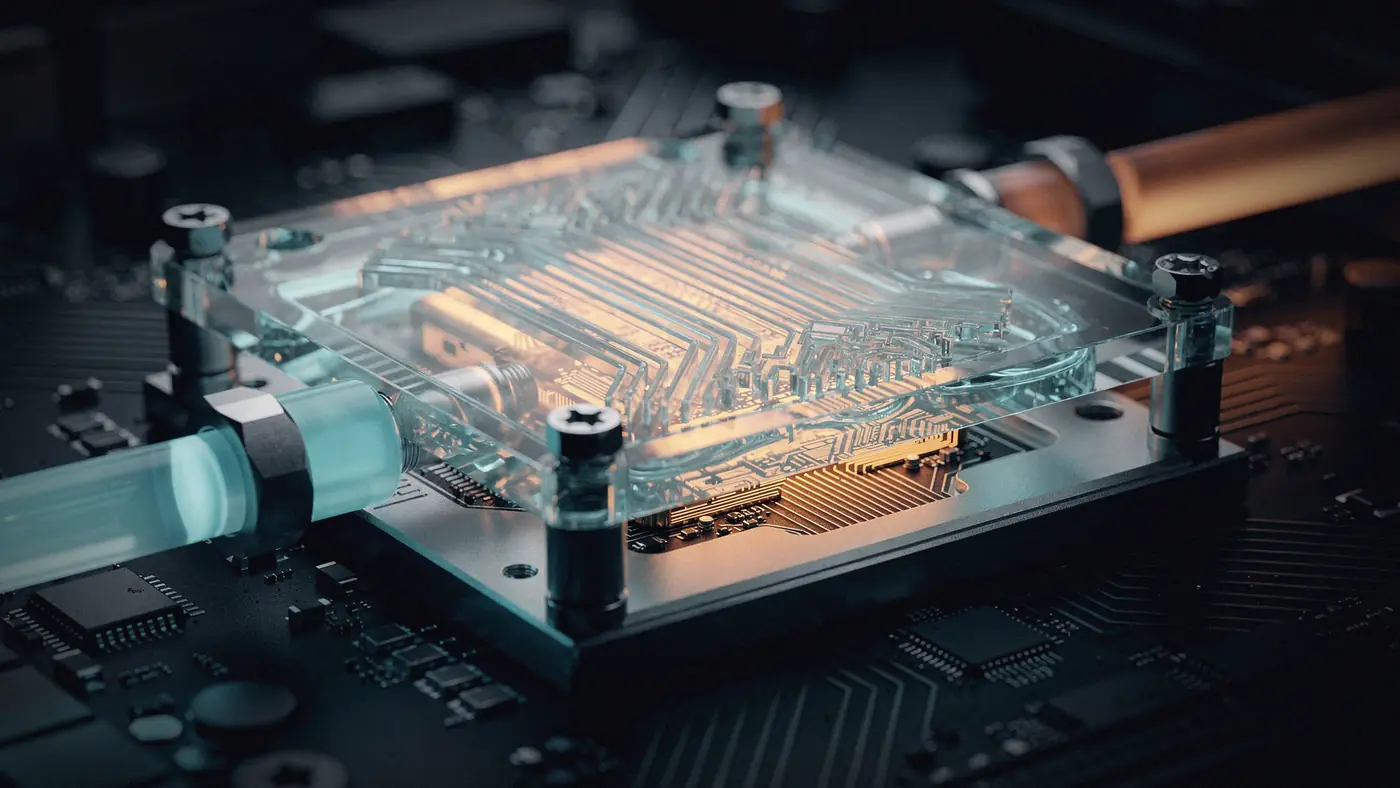
Stop 04 · the chip

Seven hundred watts, one accelerator

Inside each machine, a single accelerator can draw up to 700 watts, which is why the coolant runs to the chip itself rather than to the air around it. Its memory bandwidth, not its arithmetic, is what usually limits your answer.

700 WH100 SXM, up to

Your whole prompt goes through the model in a single pass. That pass is called prefill.

NVIDIA H100 product page · source 5

A liquid-cooled accelerator module glowing on a board.
AI-generated still from episode 1

Stop 05 · the answer

One token at a time, back to you

The reply is not sent when it is finished. The page holds a one-way stream open and each token is pushed down it as the model produces it — which is why an answer types itself out in front of you.

3–4 sa whole reply, representative

The answer arrives in pieces the same size as the ones your prompt was cut into.

Server-sent events; timings are representative, not measured · sources 4, 25

An aerial view of a lit data-center campus at night.
AI-generated still from episode 1

Episodes

One question, answered the whole way down

Episode 1 · 17 min · Saturday 26 September

What Happens When You Press Enter on ChatGPT

The route a prompt takes: eight bytes off your keyboard, across the country in glass, into a hall that draws megawatts, through a chip under liquid cooling, and back as words.

After 17 minutes you can explain:

  • why your words have to become numbers before a model can read them
  • why a chip that draws 700 watts spends most of its time waiting
  • why the answer arrives one word at a time, and not all at once
  • why a longer conversation costs more than a short one

Episode 2 · in production

Inside a training run

How a frontier model is actually made: the data, the months of compute, the humans in the loop, and what the published record does and doesn't tell us.

What this is

The layer under the one you use

Most explanations of AI stop at the metaphor. This one keeps going, until you can picture the machine: what your words become, where they physically go, what the hardware is actually doing while you wait, and why any of it takes the time it takes.

Getting there takes weeks of reading specifications, papers and standards — and the point of that reading is the simple version at the end of it. A simpler explanation that would mislead you doesn't ship, however well it would play.

Receipts · episode 1

Every claim, and where it came from

Every episode ships its full list; this is episode 1’s twenty-five. Open them and check us — that is what the list is for. If a number here disagrees with the video, or with your own experience running these systems, tell us and the correction gets published.

Correction · 21 September 2026

At 0:11 and 6:10 the video says a token becomes “twelve thousand numbers”, and shows 12,288. That is GPT-3’s published width, not a GPT-4 figure — OpenAI has never disclosed GPT-4’s, and it is not in the leaked reports either. The idea holds: each token becomes a long list of numbers. The exact count for GPT-4 is unknown.

What is solid, and what is not

The protocols, the published research and the hardware specifications are checkable primary sources. The GPT-4 internals — about 1.8 trillion parameters, about 280 billion active per token, sixteen experts — are widely reported estimates from a July 2023 report, never confirmed by OpenAI. The timings are plausible ranges for this class of hardware, not measurements of anyone’s production system.

Show the remaining 17 sources